Laura Gilbert explains why we should use new tools in policymaking and how to do it well
Policymaking in government often has a tenuous connection to outcomes. Too often it’s like navigating through fog, destination unseen with the ground uneven and unpredictable beneath your feet.
At its best, a new policy is researched and debated over several months by a departmental team working with dedicated political advisers, tested against the evidence, costed, consulted on and improved by people who know the terrain. Other times, policy arrives with a minister or a special adviser who already holds a confident view. Sometimes that view is right. Sometimes it rests on a misunderstanding that nobody in the room has the standing or incentive to correct. Sometimes, anxious to avoid any measurable outcome that might later reflect badly on them, policymakers produce unevidenced interventions with a horizon so long, or effects so diluted, that nobody can tell whether the policy has worked until a great deal of money has been spent and everyone responsible has moved on.
More than once, I have watched policy be created overnight by four blokes from the same school, in a room in Downing Street, with a pizza and a beer or two, producing a position that would be announced in the morning. Policy made this way is disconnected from the system that will have to deliver it; it carries all the failure baked in by groupthink and cognitive bias in place of evidence. In almost every case, failure comes down to the same thing: nobody asked the questions that would have highlighted potential flaws, not least of those whose role it is actually to deliver the policy.
Prisons dilemma
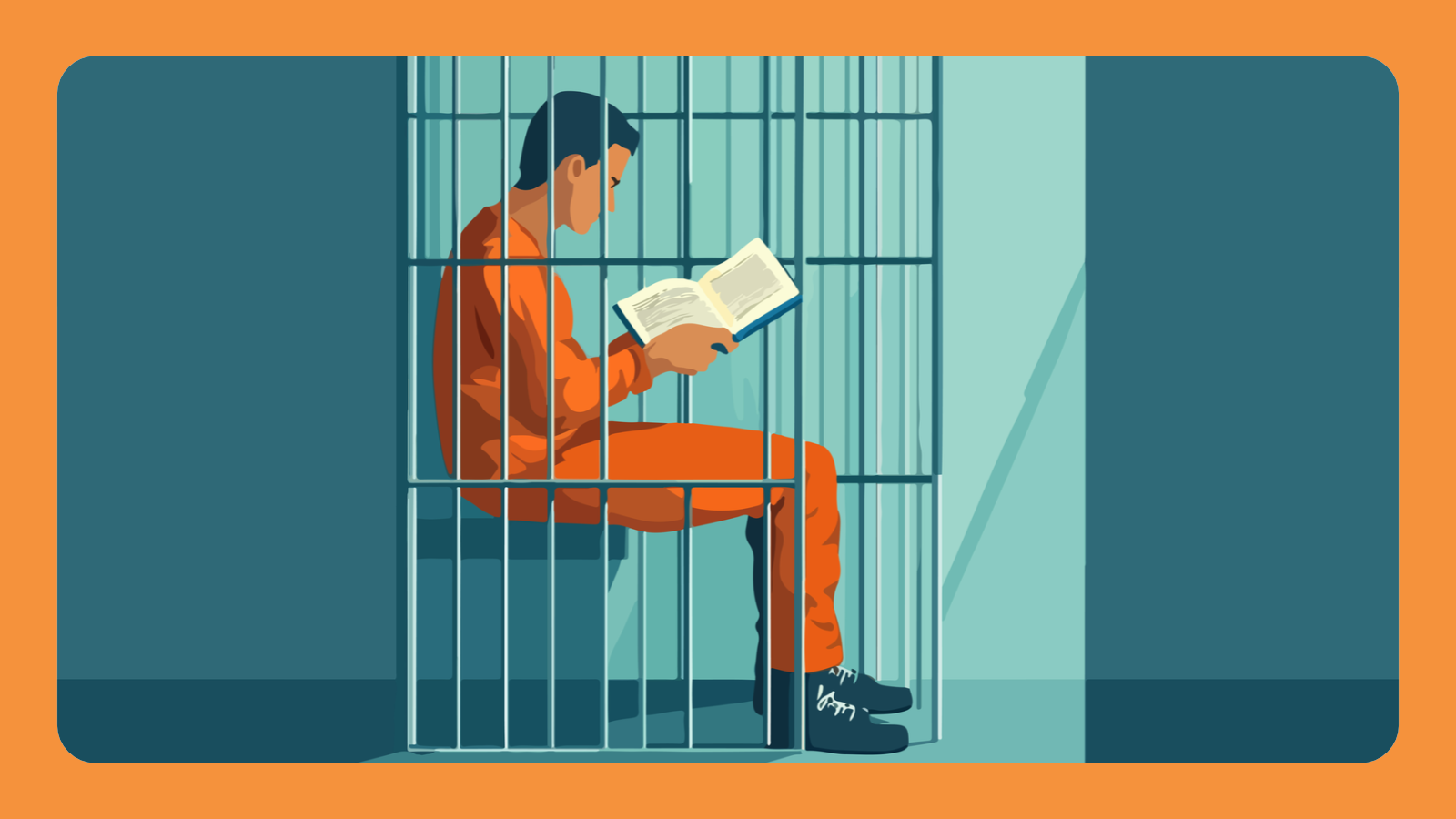
Take one department and one objective as an example. With the social and economic cost of reoffending estimated at around £18bn a year, every prison governor in the country has, for many years, been measured against whether the people who leave come back.1 So far, so sensible.
In 2014, however, the Ministry of Justice launched Transforming Rehabilitation, a £3.7 billion reform that split probation in two and handed low and medium risk cases to 21 private companies on payment-by-results contracts.2 It was implemented at speed, without a pilot, over the objections of probation staff and of the Public Accounts Committee, which warned in 2016 that the payment model could not work.
It was a predictable failure and one anybody working directly in the field could have explained. Reoffending data takes two years to arrive and cannot be attributed to any individual provider. So the contracts were paying for a result that could not be adequately measured.
But the deeper problem is more general: there is no early signal, no point at which someone can say: “This is going wrong, let us intervene.” The damage accumulates in the dark and surfaces only when the money is spent. The Ministry had forecast £10.4 billion in economic benefit; instead, while the share of offenders who reoffended fell slightly, the number of reoffences per reoffender rose by 22%, swamping the first effect. A surge in short-sentence recalls followed, a Chief Inspector called the system irredeemably flawed and early termination cost the taxpayer a further £467 million.3
I was not in government for Transforming Rehabilitation. But I was there on 3rd March 2022 when the then Justice Secretary and Deputy Prime Minister formally opened HMP Five Wells, the flagship of the Ministry’s own prison-building programme, where staff explained that calling people “residents” formed part of their rehabilitative approach. This did not fit the prevailing political mood. In April, the Ministry issued a directive instructing prison staff across England and Wales to stop referring to people in prison as “residents”, to cells as “rooms” and to abandon terms like “service users” and “clients”. Government sources framed it as an end to “woke” language, on the grounds that softer terminology had damaged public confidence in the justice system. Nobody had established, though, that the public held a view on what prisoners were called. I have found no polling that asks.
What was well known, but presumably went unread by the people making that decision, is 60 years of research on labelling, from Howard Becker in the 1960s to Shadd Maruna’s work on desistance in 2001, which found that people who successfully stop offending do so by building an identity not organised around their conviction.4 The classic claim, that calling someone a criminal makes them one, has surprisingly mixed support. But a narrower finding holds up well: labels change how everyone else treats the person. Negative ones increase the belief that someone will reoffend and perceived stigma predicts recidivism after release. To be absolutely clear, there is no clean causal study I can find showing that the word “resident” reduces reoffending by a measurable margin. But a good policy process would have found the literature, weighed it, acknowledged its limits and made a judgement in the open, particularly given the spectacularly costly failure that had preceded it in exactly this space.
Two policies, eight years apart, one department. One cost half a billion pounds and was measured. The other cost almost nothing and cannot be measured at all. Both were made because, fundamentally, nobody asked the people who already knew what the unintended consequences might look like.
The power of AI in policy
The resources available to make good policy are wildly unequal. A Secretary of State has a department: analysts, lawyers, economists, delivery specialists, an entire apparatus for turning an instinct into something implementable. A shadow minister has a researcher and a half. A select committee has a small team of clerks and whatever it can extract from witnesses. A backbencher with a genuinely good idea has, in practical terms, nothing.
This not only produces worse policy from the opposition. It degrades scrutiny, which is a problem for everyone. A select committee cannot interrogate an impact assessment that it lacks the capacity to analyse and an opposition that cannot construct a serious alternative cannot force a government to defend its own.
AI will not clear the fog; nothing can do that completely. But it can light the next six feet far better than we are able to now. It can give a policymaker enough evidence to take the next step with more confidence, then the step after that. It can be used to build in evidence gathering and evaluation and to adjust when things are proven to be going badly. That, for me, is the best argument for the use of AI in policymaking.
Here are the principles I believe any AI tool supporting the policy profession, or government work more broadly, should embody.
- Outcomes before solutions, with the tool refusing to proceed until the objective is sufficiently specified.
- Real, verifiable evidence presented with its uncertainty attached rather than smoothed into false confidence. A policymaker who knows the evidence is weak can still act; one who wrongly thinks it is strong cannot correct.
- Stakeholders identified at the design stage, not discovered at implementation.
- Novel and unevidenced options labelled as such, so that innovation is a conscious choice rather than an accident.
- A real set of decisions placed in front of the user wherever human judgement is warranted, which in policy is nearly always.
- Access distributed rather than concentrated: available to the opposition, the select committees and the devolved administrations, not only to the ruling party or the lead department. AI could close gaps almost overnight. It could also entrench them permanently, if the effective resources go only to the people who could already afford good advice.
Here’s one we made earlier
I built an AI tool with excellent colleagues at the Tony Blair Institute for Global Change to bring evidence and critical thinking into policy. I am not trying to sell it. Based on the feedback from government users so far, it does not need me to; it speaks for itself. But I am very proud of it, because it was designed to encapsulate everything I believe about how AI should intersect with human behaviour to produce better decisions, especially in government.
The tool is CentreAI Policy, a policy research and design assistant launched in September 2026.5 Working with it looks like this:
- First, it works with the policymaker to establish what outcome they actually want and need, suggesting possibilities and pushing them to add and refine. A confident policy attached to a fuzzy objective tends to fail in a way that is hard to learn from. It still astonishes me how often a policy is launched without anyone being clear about the outcome it is meant to drive.
- Then it builds what we call the state of play: the statistics on the scale of the issue, what is known about public opinion, an assessment of political salience, a root-cause analysis of why the problem exists, the existing legislation and regulation, a timeline of what has happened and what has already been tried. This becomes a shared picture and the human can argue with it, correct it and add what they know that is not public. The tool is carefully engineered to cite its sources directly and not to hallucinate.
- Next, it looks abroad for policy levers that might drive the outcome, anchored on curated information about government policies, evaluations and academic research worldwide. What has been tried elsewhere, how strong is the evidence and, critically, how similar is the context. A policy that succeeded in Denmark may be useless here for reasons that have nothing to do with its merits. Where the transfer looks plausible, it develops implementation options for the country it is working for. It is country- and language-agnostic: you can design an affordable-housing policy for Kenya as readily as for the UK.
- Alongside the evidence-based options, it offers a set of novel levers, clearly flagged as ideas from think tanks, academics or local government that nobody has tried at scale, or where the evidence is thin. Ministers should be free to innovate. They should simply know when they are doing it.
- At this point the user cannot proceed without engaging with the options and weighing them against what they know and what they believe their stakeholders will accept. They work directly with the tool to design and agree workable options.
- Then comes my favourite part. The tool generates simulated stakeholders, carefully representing what is known of the views of real ones: the members of the public who would be affected, the people tasked with delivery, the public bodies involved, advocacy groups, professional organisations, sometimes foreign governments. This does not replace meeting real people. It helps you work out who needs to be in the room before the policy is fixed. You cannot switch it off; the impact on real people is built in. You can work through how the policy might change to meet their needs better, or to harm fewer of them. It would, in effect, have put a prison governor in the room in April 2022, before the directive went out rather than after, in exactly those cases where there is no time to find one, or where nobody thought to ask.
- Finally, it sets out every source of evidence it has used, transparently.
The tool compresses perhaps three weeks of research into under 15 minutes. But what tends to surprise users is that the tool is in essence designed to make the human work harder, not less hard. The theory is fairly simple: it trains and supports better decision-making. If you used this tool and it were then taken away, you should make better policy than before, because you would understand the outcomes to focus on, how to judge the quality of evidence and what you need to know about the people affected before you decide.
The work that should remain is the harder, more human part. If a system can do the literature review and the evidence synthesis in minutes, what it frees up is space for judgement, fine-tuning of options and weighing of decision points. Good tools should reduce cognitive drudgery and raise the amount of genuine judgement a policymaker is expected to exercise. That is not a threat to the profession, it frees the profession from the parts that get in the way of good judgement.
Better to cannibalise yourself
There is a great deal of uncertainty about the future of work. What will it mean to be a professional policymaker in 3 to 5 years, or in 2o? It would be entirely natural to resist the arrival of AI in a profession that touches our own livelihoods. But there is a principle familiar to anyone who has worked near management consultancy: better to disrupt your own model than to wait politely for someone else to do it to you, in ways you cannot control.
Applied to the Civil Service, this means something we need to face carefully, and soon. Work currently done by people will be done by machines. The literature review, the international comparison, the first cut of the options paper, the summarising of consultation responses, the assessment of procurement returns: a capable system now does these in minutes and a properly designed and tested one does them more thoroughly than a tired analyst juggling four other commissions. Pretending otherwise is not a kindness. It denies people the time to prepare and help build the right solutions, human-centred tools that speed up good work rather than replacing the humans who do it.
There is a serious worry attached to this and it concerns the pipeline. The tasks easiest to automate are largely what junior analysts do and doing these is how junior analysts become senior ones. You learn to smell a weak evidence base by handling a great many of them. You learn what a delivery risk looks like by being wrong about one. If we automate the apprenticeship, where do the judges of AI output come from in 15 years?
That is not a reason to leave the tools unbuilt; if we do not build them, someone else will. But it is a reason to be deliberate about what junior work becomes. Reviewing, challenging and stress-testing machine output is a harder skill than producing the same output slowly, not an easier one, and it is barely taught anywhere. Get this wrong and we will have a generation of policy professionals who can operate the tools but cannot tell when the tools are wrong, which is a worse place than the one we are in now.
Moral dilemmas
Is it appropriate to use AI to help build policies that affect people? I would argue strongly that it is, though not for the usual reason of efficiency. The case is more powerful than that.
- It closes the information asymmetry between those who have the time or experience to know the pertinent facts and those who must decide without them.
- It makes checking the evidence cheap and fast so there is no longer any pressure to skip it.
- It puts the people affected in the room while the policy can still change, rather than in the post-implementation review where their objections are merely a matter of record.
- It makes people more accountable for doing better work, precisely by reducing the asymmetry that obscures poor work.
All of this depends on good design. A tool that writes the options paper faster, but without defining the outcome, without focusing on who will be affected, or without showing the evidence honestly, does not fix the problem. It industrialises it. Four blokes with a pizza and a large language model can generate a great deal more bad policy, with a false veneer of rigour that makes that policy harder to challenge.
Whether we are building the tools or training the people who use them, the measure is what remains when the machine is switched off. Does the policymaker now ask, unprompted and out of habit: what am I actually trying to achieve, what does the evidence say, how good is it and who has to live with this once I have moved on?
Those questions would have caught the prisons directive. None of them requires a computer. What AI does is make them cheap, achievable and hard to avoid.
The problem was never that four people had an idea at nine o’clock at night. Ideas at nine o’clock at night are often rather good. The problem was that by morning, by the time the policy was announced, nobody had asked the right questions
Laura Gilbert was formerly Director of Data Science in No. 10, creating the Incubator for Artificial Intelligence (i.AI) in government, and more recently Senior Director of AI at the Tony Blair Institute. She now works independently across government, industry and civil society, chiefly with the UK public sector. Her focus is on using AI to build the society we all want to live in.
Footnotes
↩
↩
↩
↩
↩