
Emily Connolly, Deputy Director for Technology Insights, Futures and Foresight, introduces the new AI Scenarios 2030 and how civil servants can use them
I celebrated an important milestone this summer. 10 terrific years working in technology futures for the Government Office for Science. It’s an ideal time to take a quick look back, in a job where I spend most of my time thinking about what will come next.
When I started in this team in 2016, Sir Jeremy Heywood was Cabinet Secretary, and a big part of my job was to bring the “top ten technologies” to the Cabinet Secretary’s Advisory Group (CSAG) on Horizon Scanning. These senior leaders had come together following the 2013 Jon Day review of horizon scanning, with Sir Jeremy personally championing the joining-up of activity in this area. The purpose of the group was to consider and challenge key judgements that had strategic implications for the UK, determine actions and incorporate horizon scanning into the wider Whitehall agenda.
Virtual reality was one of the technologies I explored first. We organised a demonstration for permanent secretaries that was as amusing as it was educational: serious people in suits gingerly stepping into other worlds, flinching or laughing as they forgot, momentarily, where they were. At an event in Admiralty House, senior civil service participants donned robot-like headsets, surrounded by the grandeur of a Grade I listed building. That juxtaposition was striking – cutting-edge technology against centuries of institutional history – but also oddly reassuring. People were genuinely trying to feel the future: not just its opportunities but its risks.
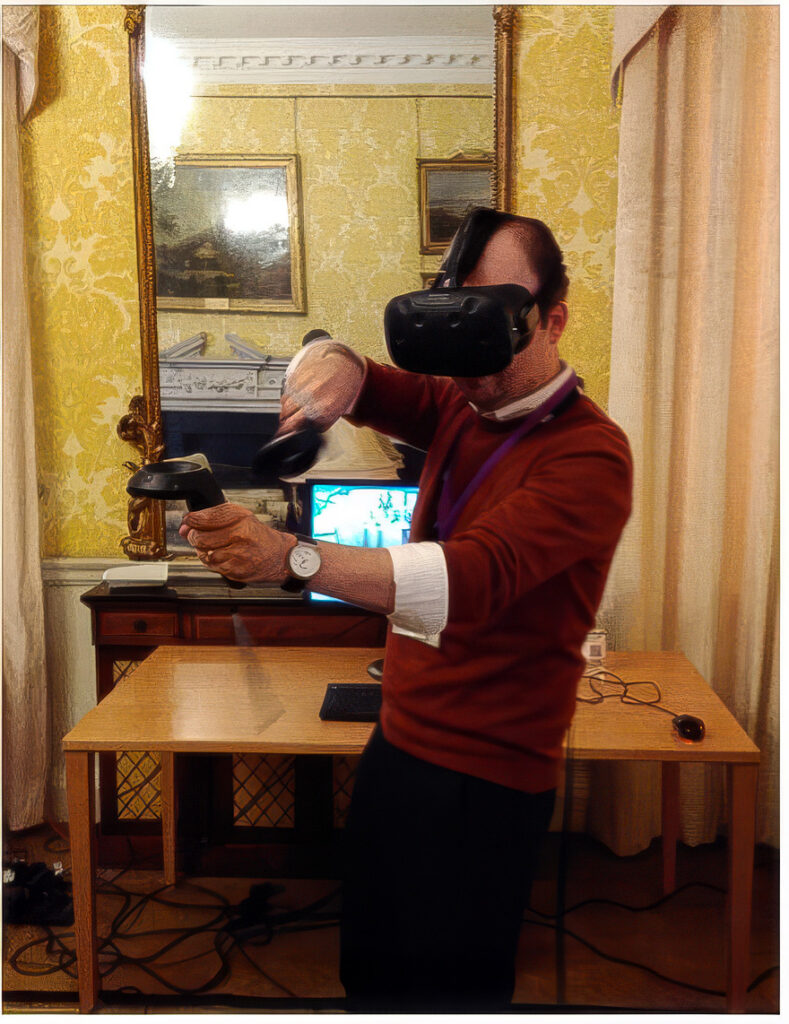
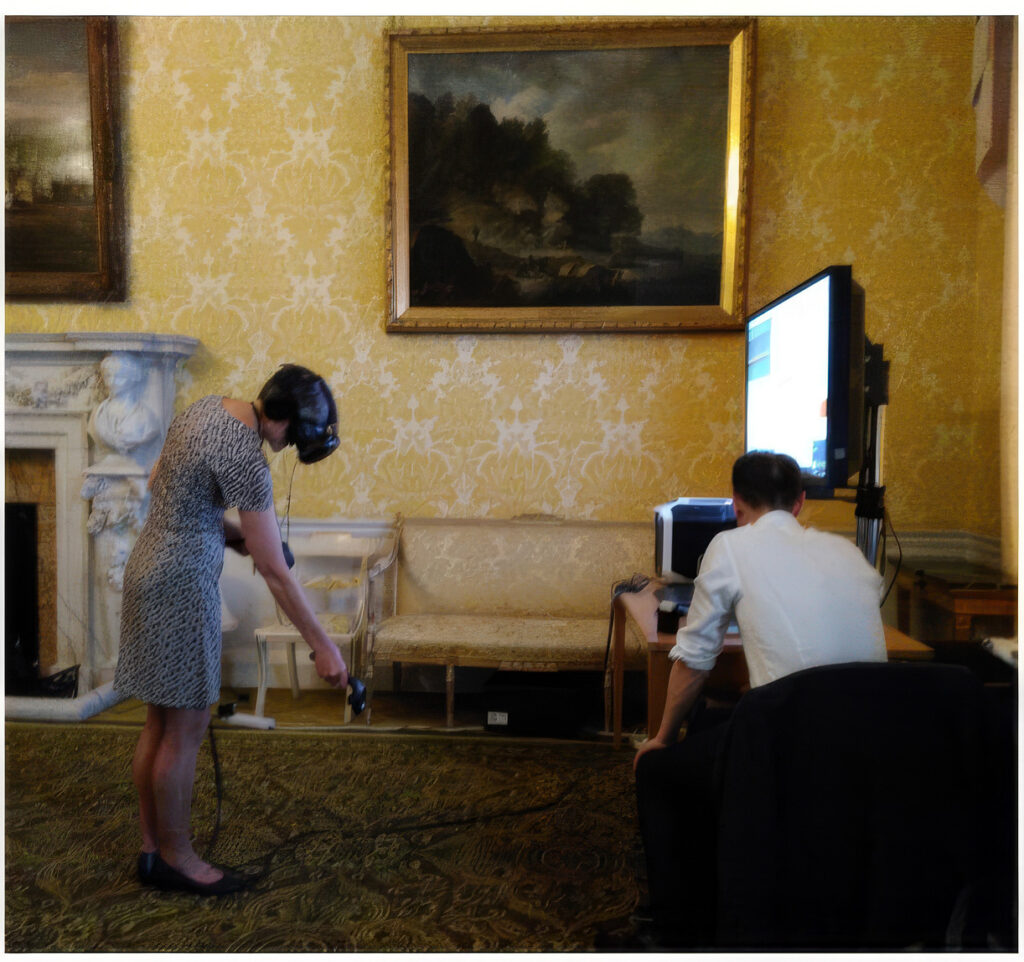
Ancient and modern: Images showing civil servants learning about VR for engineering and healthcare.
Artificial intelligence was already on our radar back then. In 2016, for example, we published advice on how it could influence decision-making. In 2017 we briefed CSAG on “The future of work – labour markets and automation”, explaining how AI might affect jobs and society. We recommended the use of scenarios to prepare for multiple possible futures.
AI sat reliably in our top ten technologies to watch, year after year. For a long time, that felt sensible rather than urgent. In 2022 we began digging more deeply into AI, advising policymakers on the developments in foundation models and their transformative potential.
Then, near the end of 2022, came ChatGPT.
As this turned heads and raised questions, demand for our explainers on AI grew overnight. The AI Security Institute was still in the future. We interviewed frontier labs and academics trying to make sense of the hype and confusion around artificial general intelligence (AGI). We were the first to brief government on this topic.
The first global AI Safety Summit, hosted by the UK at Bletchley Park in November 2023, drew on our work around capability and risk. The location was deliberately symbolic. Bletchley is where the foundations of modern computing were laid under conditions of profound uncertainty and national jeopardy. Bringing together governments, industry and researchers to discuss the safety of frontier AI felt like an acknowledgement that we had entered a new phase – one where capability, speed and concentration of power demanded collective stewardship, not just innovation. The summit concluded with the Bletchley Declaration which committed governments to international cooperation on AI safety, including a determination to build shared scientific understanding of risks.
With many pressing questions about what could happen next, in 2023 we created our first set of AI Scenarios 2030.
Scenarios are structured descriptions of plausible future worlds, used to help decision-makers explore uncertainty, test assumptions and make choices that remain robust across some of the different ways the future might unfold. The scenarios were built from a set of critical uncertainties – the most important elements of change. These were capability, ownership and access, safety, adoption and geopolitical context. More about these uncertainties below.
Since 2023 AI capability has continued to develop rapidly. In 2026 our Foresight team reviewed the scenarios to make sure they remain plausible, stretching and scientifically accurate, as well as to provide a better balance across risk and opportunities. They were published in June.
The AI Scenarios 2030 (2026)
While similar in many ways to those from 2023, the 2026 version contains updated assumptions and a new narrative, as well as some more positive futures.
2030 is still the chosen year of focus, sufficiently far ahead to be a critical planning horizon but still highly uncertain given the pace of change in the technology. There isn’t a right or wrong time horizon, and too much focus on the date in policy testing is unhelpful. The time range can be flexible to the question; we are, for instance, developing scenarios for the Future of Childhood some 10 years later than this and thinking about what technology and AI could look like by then.
The design features are the same as in the previous version. We reiterate that they are not predictions and the real future is likely to contain elements from more than one scenario.
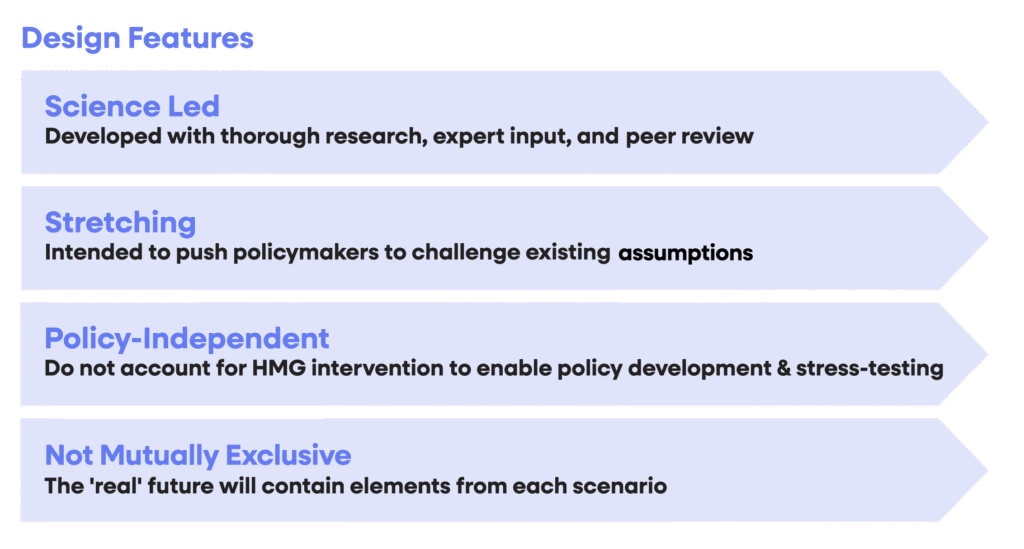
At the core of the scenarios, as in the 2023 version, is uncertainty about capability – how powerful AI systems might become, particularly in their ability to reason, plan and act with limited human oversight. Closely linked are distribution and access: whether advanced AI remains concentrated in a small number of firms and/or states, or becomes widely available through open models. A third uncertainty (particularly topical at the moment) concerns security, including the extent to which technical safeguards, governance and norms keep pace with rapidly advancing systems.
Outcomes also depend on how AI is used and adopted across society and the economy – whether the benefits are broadly shared, or whether the technology creates disruption or falls prey to misuse. One new element this time is possible labour market disruption.
These uncertainties are shaped by the wider geopolitical context, including levels of international cooperation, competition and trust. The scenarios explore how different combinations of these factors could plausibly interact, emphasising again that they are not predictions but structured ways to stress test policy against deep uncertainty.
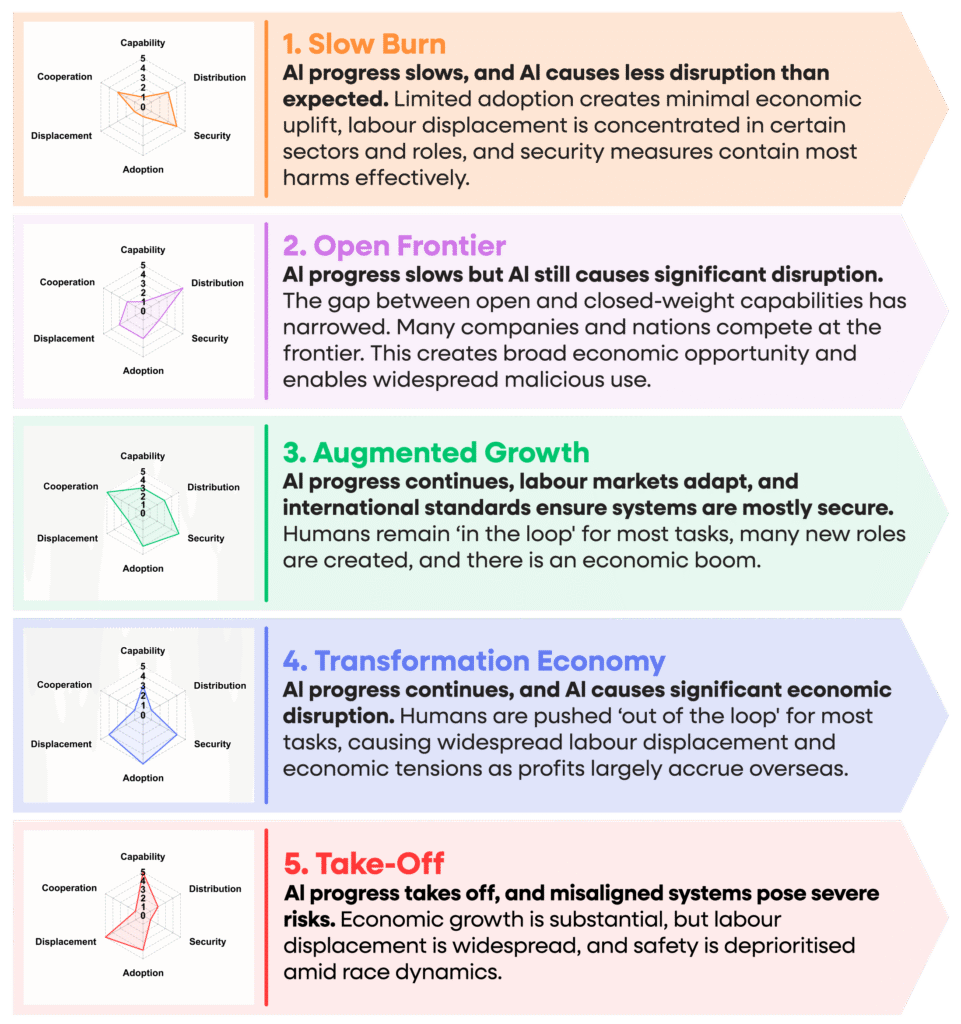
At the minimal end of the spectrum, the Slow Burn scenario reflects a world where progress is relatively slow but still meaningful, with more accessible systems, but low adoption overall. The Open Frontier scenario now places more emphasis on the opportunities from capable, accessible open-weight models, while also downgrading capability assumptions to reflect slower technical progress.
Other adjustments vis a vis the 2023 version are more structural: the assumptions around adoption in Transformation Economy have been raised to align with what rate of adoption would create widespread labour disruption, while the Take-Off scenario consolidates earlier high risk futures by merging themes and sharpening the focus on low safety and competition dynamics.
The most substantive change is the introduction of Augmented Growth, a new scenario which captures a more optimistic middle ground: high capability without full automation of human work, alongside improved safety.
Using the scenarios
There are lots of different ways the scenarios can be used. They are written as a tool for public policy development, but they can equally be used by businesses, academia or others to help structure thinking about the future.
We recommend three different types of exercise to support policy development.
- Governments using the scenarios first identify the future they do want for AI, then working back to develop a plan that helps navigate a way towards that future. We call this backcasting.
- Exploring how different policy responses perform in each scenario and how they might need to be adapted to achieve their objectives in different contexts. We call this stress testing.
- Using the scenarios to test how unexpected shocks could disrupt policy or accelerate movement toward a particular future, or one scenario rather than another.
Some parts of government have built tailored versions of the scenarios to provide more context and detailed thinking, for example for health. The scenarios as they are are nevertheless relevant to all departments, for thinking about how different AI Futures might impact society, the economy and security.
As for labour markets, the scenarios will allow us to think in more detail about changes to tasks, skills, professions and how these might change the future of the Civil Service.
Key questions include: What can be augmented or automated and how? Where is human oversight essential? What might be the impact on transparency, decision-making and the relationship between citizen and state? What external changes will have an impact on the Civil Service, for example economic pressures, devolution, public trust, citizen expectations and new geopolitical and demographic trends? How should the Civil Service respond? What is the future we desire and how do we get there? What might prevent that from happening?
Overall reflections
The AI 2030 Scenarios (2026) have been developed collaboratively with the AI Security Institute and colleagues in the former Department for Science, Innovation and Technology and have quickly become a shared tool across government. Teams are using them to structure conversations and stress test policy in very different contexts. They are being incorporated into learning and development for AI literacy in government.
Past examples of their use range from consideration of AI’s implications for the humanitarian sector to its disruptive impact on labour markets, while permanent secretaries have used them to examine what different AI futures could mean for the public sector as a whole.
The scenarios continue to offer a disciplined way to connect evidence to decisions when the future is deeply uncertain. The impact is rarely a single ‘answer’; it is better questions, clearer assumptions and more resilient choices – policies designed to work across multiple plausible futures.
In that respect, they also feel like a very practical expression of the Heywood Quarterly’s aims: investing in innovative ways of working that help the system think ahead, work across silos and make better decisions under pressure.
AI is moving at a speed that makes it hard for any one dataset, evaluation or expert view to be definitive for very long. Traditional evidence – rigorous analysis, trials, impact evaluation and independent scrutiny – remains essential. But on its own it can become reactive: by the time we have a settled evidence base about one generation of systems, the next generation has already changed the landscape. That is exactly where scenarios earn their place. They give policymakers a structured way to ask: if capability accelerates faster or slower than expected, if access concentrates or diffuses, if safeguards keep pace or fall behind – what does that mean for the choices we make now?
Crucially, scenarios are not a detour from evidence – they are a disciplined way of using evidence under deep uncertainty. The Government Office for Science is expert in this; we are the Centre for Futures in Government. Scenarios force us to be explicit about what we think we know (for example, current capability trajectories, adoption patterns or known security failure modes) and what we do not know (such as the pace of breakthroughs, how quickly safe deployment practices will diffuse or how international dynamics might shift).
In that sense, the 2030 AI Scenarios act as evidence infrastructure: they organise what we know, identify the assumptions we rely on and let us test whether a policy choice is robust across plausible futures, rather than optimal only in one.
Emily Connolly is Deputy Director for Technology Insights, Futures and Foresight at the UK Government Office for Science.
Acknowledgements: Tom Wells, Jack Snape, Martin Glasspool, David Busse, Eleonore Batteux, Karen Folkes, Luke Cargan, Theo Curtis, Chris Taylor, Simon Whitfield.