
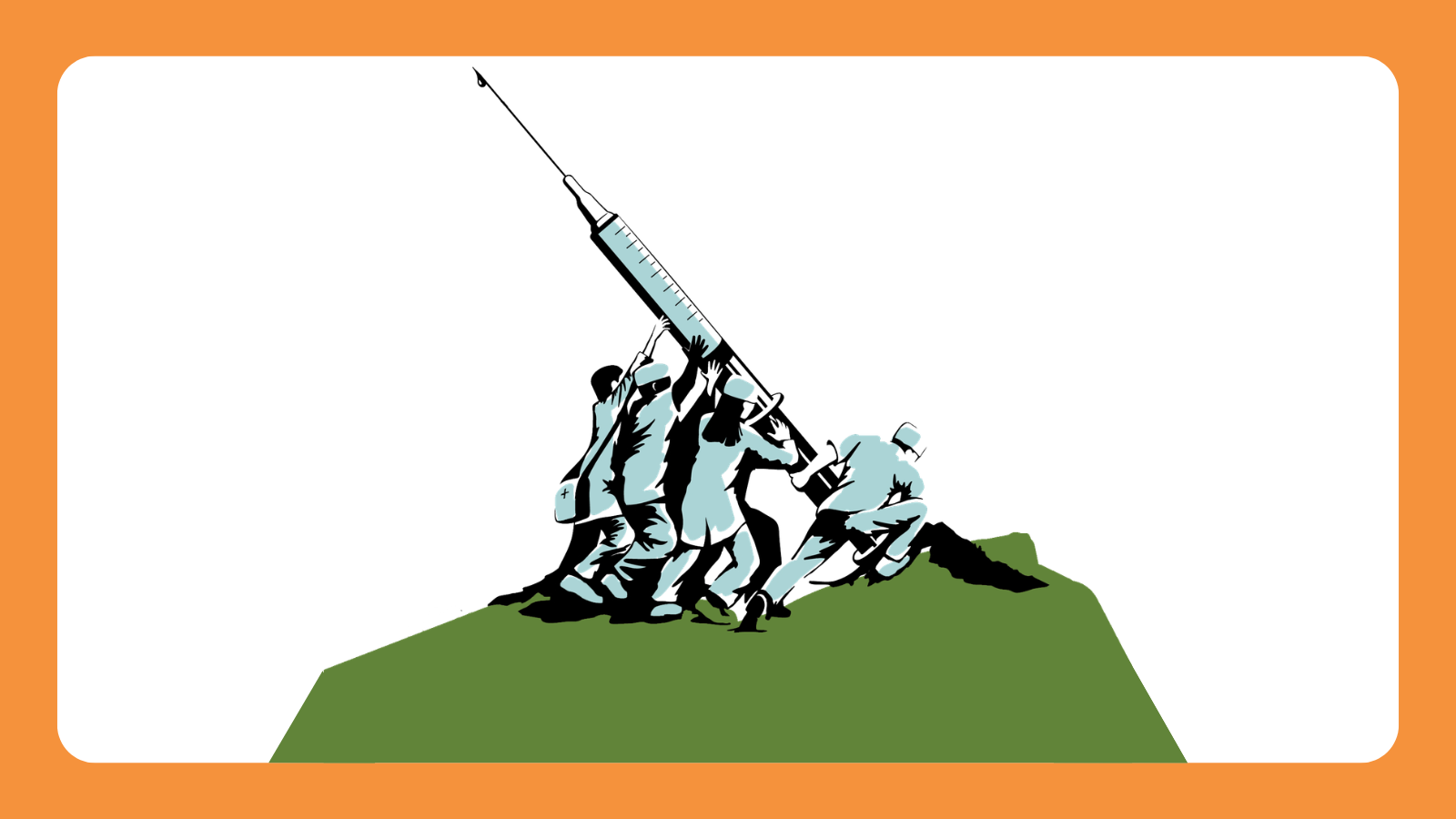
Madelaine McTernan, Chief of Defence Nuclear at the Ministry of Defence, explains how Covid and nuclear converged
People sometimes ask me how I ended up as Chief of Defence Nuclear in the Ministry of Defence (MoD), not having had a background in either defence or the nuclear sector.
Whilst it isn’t immediately obvious, there is a thread. I thrive on analysing problems: identifying issues, developing solutions and implementing them. After starting my career as a corporate lawyer, then spending more than a decade in mergers and acquisitions in investment banking, I moved to the Civil Service almost nine years ago. Here the breadth, variety, complexity and criticality of the challenges is often greater than in the private sector. It continues to keep me fully engaged.
Working on the response to Covid for over two years as Director General of the Vaccine Taskforce (VTF) allowed me to apply skills developed previously in both private and public sector roles, as well as learn a lot more about building and managing high-performing teams. I moved to the MoD three years ago and set about applying some of those lessons to the Defence Nuclear Enterprise (DNE), one of the four areas within the Department.
Although the context is starkly different now in many respects, with a long-term mission rather than a time-limited, crisis-defined remit, my time at the VTF has proved to be invaluable in my defence job. In this article, I’ll explain why.
From vaccines to the nuclear deterrent
I got involved in the search for a Covid vaccine early in 2020 when the Treasury asked if I would represent HMG’s interests in the commercialisation of Oxford University’s candidate vaccine technology (subsequently licensed to AstraZeneca and now credited with saving many millions of lives worldwide). The VTF was formed in April that year, comprising a senior team with wide-ranging experience across the public and private sectors and academia (from science and public health to venture capital and manufacturing), underpinned with core policy and programme skills. We initially had a clear and singular objective: secure a Covid vaccine as soon as we could.
I spent most of that first year leading the deals to acquire our portfolio of candidate vaccines before taking over as the Director General of the Taskforce in December 2020, just as the UK was becoming the first country in the world to start a vaccine deployment programme. We had been first to secure deals with both Pfizer/BioNTech and AstraZeneca, we were the first to roll out their vaccines, first to launch a booster programme in the autumn of 2021 and the following year, and first to secure a bivalent vaccine (targeting two variants of Covid). Later that year, we also agreed a landmark partnership with Moderna to establish UK research, development and manufacturing facilities (opened in Harwell in 2025) which are scalable to provide access to up to 250 million doses of their vaccines per year. That deal is a vital part of protecting the country against a future pandemic.
There is a bit of a myth – born of the extraordinary scale of the impact of Covid on people, the healthcare system and the economy – that VTF was somehow freed from the shackles of normal government processes and that we had authority to cut through the rules. It is true that resources and attention were unusually focused on a single issue with clear alignment on that goal across government. In reality, though, the VTF was simply a modest number of people reporting ultimately to the Prime Minister through the business and health departments, who had no significant delegated authority and whose decisions actually attracted greater ministerial oversight than normal day-to-day government business. Yet we were able to operate with the speed and agility required to deliver our mission and enable NHS partners to deliver theirs through the phenomenal vaccination programme.
Sustaining our nuclear deterrent – my current mission – does not share many characteristics with the Covid challenge. Whereas we were able to wind up the VTF towards the end of 2022, we might never be able to declare the DNE’s work complete. The UK’s nuclear enterprise has grown over decades, starting with our involvement in the Manhattan Project in the 1940s. I have visited the Trinity test site at White Sands, New Mexico and dug out original papers from the archives at Kew which include contemporary observations by Professor Sir James Chadwick, the British physicist who won the 1935 Nobel Prize in Physics for discovering the neutron in 1932 and who worked on the development of the first atomic bomb. “Although everything happened almost exactly as I had imagined it,” he wrote of that Trinity test in 1945, “the reality was shattering… I am filled with awe when I look back on this moment. It was a vision from the Book of Revelation”.
Although nuclear weapons have not been used since the bombings of Hiroshima and Nagasaki in 1945, nuclear weapons continue to, and increasingly, feature as a global threat as major powers develop and expand their arsenals. For this reason, we are modernising the UK’s nuclear deterrent to deter this most extreme threat to our national security.
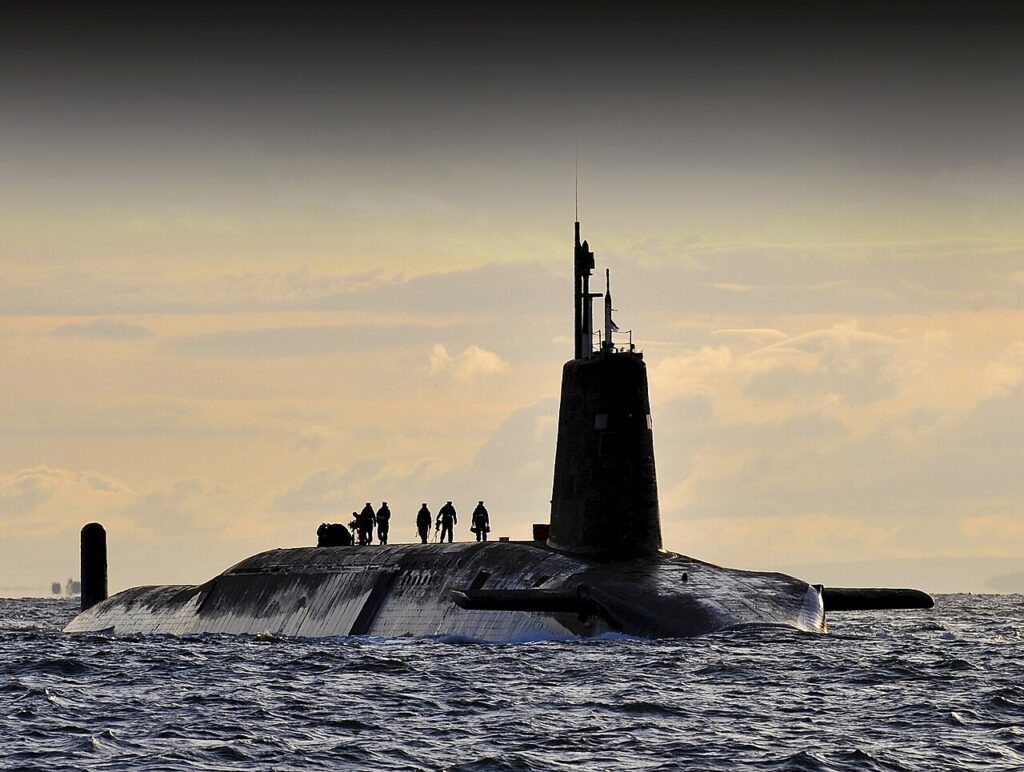
The Royal Navy deployed the first ballistic missile submarine, HMS Resolution, in 1968 and we have maintained a nuclear-powered and armed submarine fleet ever since. It provides us with an assured second-strike capability. Undetected, on patrol somewhere in the Atlantic, these submarines are capable of delivering truly awesome destructive force, even in the event that the UK has suffered a catastrophic attack first. One of the first, and most sombre, duties of a new Prime Minister is to write their instructions for such an eventuality (the ‘letters of last resort’) which are kept in safes on the submarines. The knowledge that even in such extreme circumstances we can inflict retribution at such scale delivers the deterrent effect that serves to underpin the UK’s national security.
The DNE is the umbrella term for the organisations that together deliver our nuclear deterrent on behalf of the Prime Minister, the only person who can authorise the use of nuclear weapons. It houses a complex portfolio of the most advanced and awesome capabilities including submarines, warheads and nuclear fuels as well as much of the infrastructure and facilities that it takes to build and sustain the deterrent.
The DNE’s mission to ‘Deliver the capability, deter the threat, protect the nation’ is as important as it has ever been. Defence spending, including on the nuclear deterrent, was deprioritised as the Cold War era receded. But as threats have resurged and the old norms are challenged, we have entered a third nuclear age. The scale of modernisation that we are now undertaking in our deterrent systems is unprecedented.
Translating the Taskforce lessons
As I was putting together my initial strategy for the DNE, I drew on several lessons from my time at the VTF. I have outlined some of the key ones below.
Focusing on purpose will strengthen the team
Saying you need to have a clear objective seems obvious. But defining and repeating our strategy to deliver it underpinned the VTF’s ability to move quickly when we needed to. It meant ministers were already familiar with our plan when we asked them to make decisions. That clarity can be harder to define in a more complex portfolio such as the DNE, but articulating the overall mission, the strategy to deliver it and the sub-strategies for its critical components will help drive team cohesion and maximise effectiveness with stakeholders.
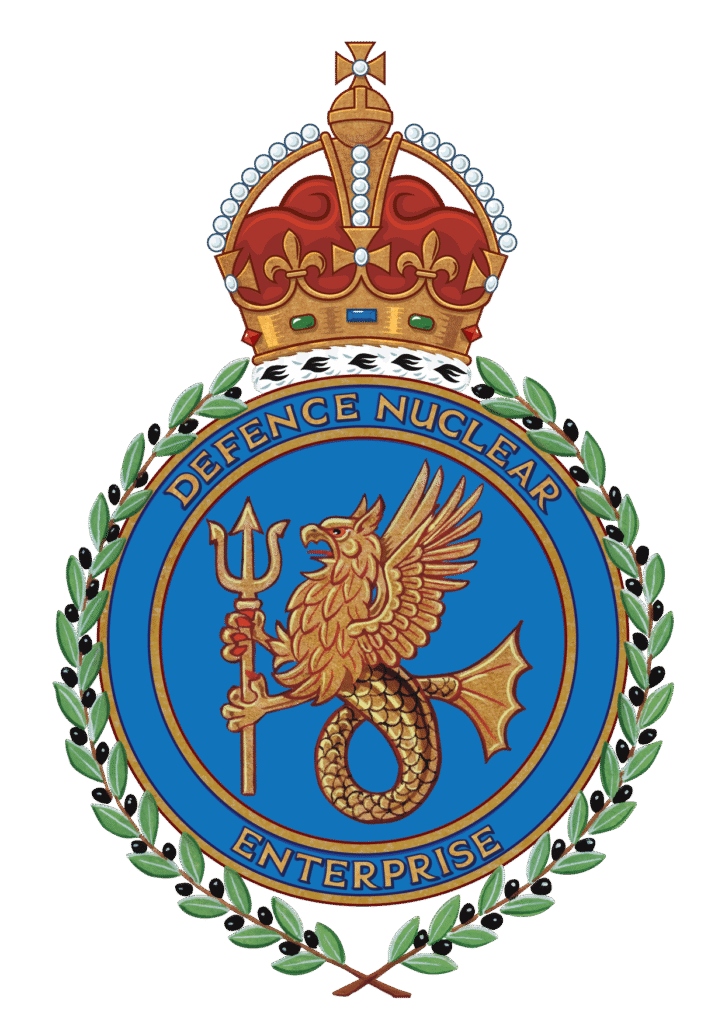
A strong sense of mission was the critical motivation for many of my VTF colleagues. In the MoD the overriding characteristic (military and civilian) is purpose. That has been a firm foundation on which to strengthen the concept of the DNE working together to deliver something consequential. We now even have our own badge, designed by the College of Arms, informed by the Naval Historical Branch and approved by His Majesty the King in 2024 (see illustration).
Be data-led but accept risk where necessary…
Data is the foundation of good decision-making: seek it, interrogate it, test it. Decision-making about Covid was notoriously difficult as, like the virus itself, our understanding of it evolved over time. We sponsored some incredible research but we couldn’t always wait for the results to inform key decisions. Had we waited for more certainty we would not have secured vaccines as soon as we did. Data is a critical tool but sometimes we need to accept the risk of what we do not, or cannot, know.
…But be willing to change course
Not every VTF early decision turned out to have been the right call. And there was some criticism where we reversed course on a couple of projects. But, particularly when spending taxpayer funds, driving value is a constant objective and so means we must be willing to adapt to new information. This was not always easy for teams who had expended effort developing a particular course of action, but the ability to show agility and adjust our focus was key to continuing to secure the right outcomes.
Prioritise outcomes over process
Government is complex, with multiple stakeholders within and outside departments, different approval processes, governance structures and assurance requirements. These processes mostly serve to underpin good decision-making but sometimes the result is over-indexing on the process itself rather than defining a path to best serve the objective. And many of these processes are self-imposed. We therefore introduced a single approval forum bringing ministers together in one panel rather than a series of submissions and discussions with individual departments.
HMS Vanguard returns to HMNB Clyde.
Our industry partners adopted a similar approach, running processes in parallel rather than sequentially. The VTF worked closely with them to map processes and identify steps that could be expedited to minimise the amount of time it took, for example, for vaccine doses to get from manufacturers to people’s arms.
Drive pace
With time a critical factor, the VTF was a very intense, seven-days-a-week endeavour. With multiple major programmes that span decades, the DNE may seem different but the reality is that speed of delivery is equally important.
Not long after I had arrived at the MoD, I showed my senior team a poster I had designed with a view to articulating this idea. It was a picture of Eliud Kipchoge finishing the London Marathon in the incredible time of just over two hours. I had added a headline: ‘The Defence Nuclear Enterprise – a marathon at sprint pace’.
This didn’t land particularly well. After all, most of us would struggle to run at Kipchoge’s pace for more than a few seconds – it isn’t sustainable. But that notion that time is a valuable resource we must not squander is still key. We settled for the slogan ‘Every day counts’.
Leverage experience and expertise
The VTF steering group had breadth and depth in expertise and experience. We didn’t always agree but we were able to test our approach from different perspectives. What would the private sector do? How would academics approach a particular question? What levers does government have?
I am lucky that the breadth of the DNE equally guarantees this range of expertise and rich experience. Being able to bring together experts on everything from nuclear physics to commercial considerations to deterrence policy can be extremely powerful. We continue to drive integration and collaboration across our teams to leverage this.
The will to succeed
Although at the time we didn’t articulate a particular VTF culture, across the senior team I noticed a common characteristic: the will to succeed.
I remember being told that, statistically, even once a vaccine reaches phase three of clinical trials it only has a 10–15% chance of becoming licensed. While we spent a lot of time thinking about which candidate vaccines had the greatest chance of success, I don’t remember spending much time worrying that they wouldn’t work. Not because we were convinced they would, simply because this was beyond our control. We needed to select those we thought had the greatest chance of success and then the important thing was to be focused on ensuring that – if they did work – we would be able to deploy them as quickly as possible in the largest volumes to the NHS.
I have found this approach of ‘what will it take?’ a powerful tool. Instead of asking ‘can we?’, it’s better to frame the question ‘how can we?’. It helps move away from solutions overly constrained by the way we might usually do things towards thinking about what would need to happen to secure a successful outcome.
Madelaine McTernan CB is Chief of Defence Nuclear at the Ministry of Defence.