
Menna Rawlings reflects on three and a half decades as a diplomat – and on peaks women have yet to scale
When I was eighteen, I completed the Tour du Mont Blanc with a group of school‑friends. It was one of my first trips outside the UK, and I was bowled over by the beauty of the Alps – the bright, improbable blue of the sky, the sharp edges of the glacial landscape, the scale of everything. But mostly I remember the long, grinding ascents and the rhythm that kept me going: just put one foot in front of the other. Don’t think about the whole trek – all 170km of it. Don’t look too far ahead. One step, then another.
It wasn’t until the final afternoon in Chamonix, sitting with our boots off in the sunshine, beers in hand, that we paused long enough to reflect on our achievement, to look back and appreciate just how far we had come.
I feel much the same about my 36‑year diplomatic career, which ended last summer following four intense years as British Ambassador to France, the first woman in that role. Returning to the UK and entering a different landscape altogether – Cambridge, and my new role as President of Queens’ College – has finally given me space to reflect. For decades, I rarely stopped to take stock. There was always the next brief, the next crisis, the next posting. But now, I can look back on a life-long diplomatic journey around the world and absorb the extraordinary nature of it all.
When I joined the Foreign Office in 1989, it still carried the imprint of a world formed centuries earlier. Diplomacy had long been dominated by men who were well‑connected, well‑educated and very sure of their place in the system. Women had only been fully admitted into the UK Diplomatic Service in the post‑war period, with the first female diplomats appointed in 1946. The marriage bar – which forced women to resign when they got hitched – remained in place until 1973.
I thus entered a system caught on the cusp between a bygone era and a period of massive societal change. When I told my grandmother that I wanted to be a diplomat, she said – “Surely you mean a diplomat’s wife!” This surprised me, as I had been brought up to believe that opportunities were open to me. After all, we had a female Prime Minister in Margaret Thatcher and a female Head of State (HM The Queen) at the time, so the idea that diplomacy was out of the reach of women felt bizarre. I had no idea that in 1989 we only had two female ambassadors representing Britain overseas.
Stepping into the hallowed halls of the Foreign Office that year was a massive culture shock. Aside from gender, I entered that world from an ordinary comprehensive school via the London School of Economics, so I had no clue about diplomatic protocol (still not my strongest point!). I was keen to learn but felt deeply unsure of myself, as though everyone else knew the rules of a game I had never been taught.
Recently, I watched a documentary series on the Foreign Office that was broadcast around the time I started my first role. The accents, the all-male meetings, the smoking in offices look more like the 1950s than the late 1980s. Watching it, I understand why I felt so out of place, as a woman from a modest background – a double whammy – and the impact that had on my psyche. Back then, I simply felt inadequate, an imposter trapped in a syndrome that had not yet been invented.
Things changed when I left London. Overseas postings – Brussels, Nairobi, Tel Aviv, Accra – were where I grew into the job. Embassies felt less formal, more human. Working alongside brilliant locally‑engaged colleagues, I found a diplomatic culture that valued relationships, creativity and simply getting on with things. I discovered that my natural instincts – curiosity, empathy and a genuine interest in people – were strengths rather than distractions. With few senior women to emulate, I pieced together my own way of being a diplomat, against a world in flux.
Some of my early experiences were difficult. In Brussels, I endured sexual harassment from a senior colleague. In Kenya, I was held up at machete point in Nairobi and later dodged bullets at a polling station. On another trip, a plantation owner turned up uninvited in my bedroom. These days, there are harassment policies and risk assessments in place for all our staff. Thank goodness for that – but I also learned from each tough experience, becoming more resilient and more confident.
There were still hurdles to overcome, as the Foreign Office dragged itself towards the 21st century. When I hit my 30s and my child-bearing years, my partner and I were unmarried – meaning he was ‘unrecognised’ by the Foreign Office and not entitled to any of the benefits available to spouses. He still tells the story of how our baby daughter and I flew business class to Tel Aviv, while he arrived the next day at the back of a charter flight (reader, this was the year 2000).
When I told the DSWA (Diplomatic Service Wives’ Association – still wives!) that the policy was discriminatory and outdated, the Chairwoman responded that her generation had put up with it, so I was expected to do the same. I started to use my voice more to advocate from within, joining a growing band of women to push for change and more supportive HR policies for women and their families. Change came in fits and starts initially, but the Office started to feel like a different place – a Diplomatic Service that looked more like the country we served, connecting foreign policy with positive outcomes for communities across the UK. Now, around 40% of senior British diplomats are women – a sea-change from those early days. And there are plenty of ‘diplomums’, juggling work overseas with childcare and issues around spouse employment. My partner and I went on to marry, and had three children who travelled the world with us. That was not always easy, but I’m grateful to have lived in an era when it became possible, for the first time in our history. Finally, women have choices.
Of course, it wasn’t just British society that changed dramatically over the intervening period. The Cold War ended just as I was starting out, reshaping alliances and opening doors that had long seemed sealed, even if some have slammed shut since. China has risen from a distant power to a central force on the global stage. Terrorism, especially after 9/11, changed foreign policy priorities almost overnight. And technology has transformed the pace and nature of diplomacy (see the ‘Tech and diplomacy’ box below). Adaptation became second nature – a professional muscle memory.
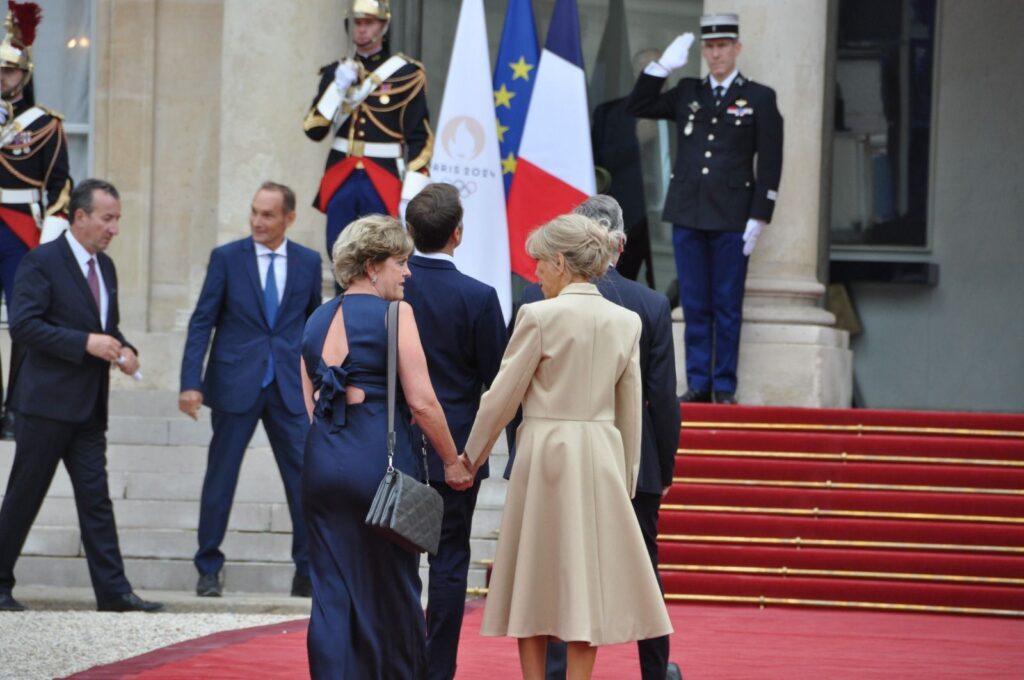
Menna and Brigitte Macron at the opening ceremony of the Paris Olympics in 2024.
Soft power, public engagement and later social media reshaped the job yet again. Authenticity, not artifice, became one of the most effective diplomatic ‘tools’. Turning up as yourself, speaking directly and openly, often achieved more than the most carefully polished communiqué. As Robert Cooper argues in his book, The Ambassadors, in diplomacy “empathy and imagination matter as much as clarity and precision. Indeed they matter more. Diplomacy is an art not a science.”
Hear hear. And women, I would dare to suggest, often excel in this modern diplomatic era. We understand that diplomacy is a team sport, founded on collaboration, relationships and inclusive leadership of diverse teams. We are practised at juggling multiple demands. We have deep reserves of resilience, passed down through generations of women who managed more with less. And we can, when required, shake the glitter on the driest of diplomatic gatherings – creating connection on unpromising terrain. When I arrived in Paris in 2021, with diplomatic relations in the doldrums, we leant heavily on soft power, throwing sparkling launch events for new Bond and Paddington films, which the French found hard to resist! The death of Her Majesty Queen Elizabeth II, loved and revered in France, reminded us of the emotional connection between our two countries, and the enduring nature of our ties.
People often ask me what impact the arrival of female diplomats has had on diplomacy and international relations. Not as much as I would have liked, I say, given the turbulence and kinetic change of the last 40 years. Women seem marginalised in a world dominated by strongmen with big guns (and drones), as we watch with horror the events unfolding in the Middle East. But in my more optimistic moments, I know that gender has entered the mainstream of foreign policy, with strong British leadership on issues like Preventing Sexual Violence in Conflict (PSVI), the campaign against female genital mutilation (FGM) and better development outcomes globally for women and girls.
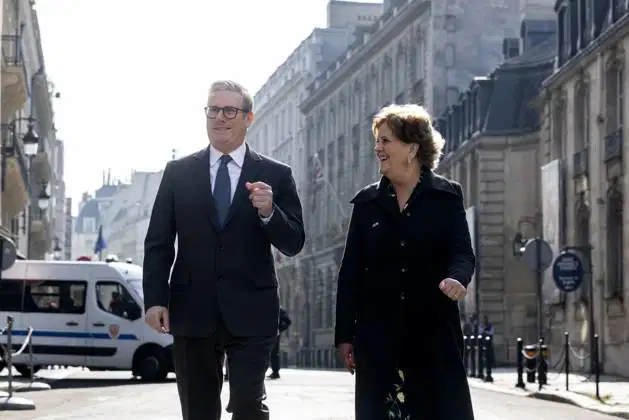
Menna walking through Paris with Keir Starmer in 2025.
For a moment in 2021, every UK Ambassador in G7 capitals (Paris, Washington, Berlin, Rome, Ottawa, Tokyo) was a woman – a milestone that spoke to a long‑awaited shift. As the first female Ambassador in Paris after 36 men, I felt proud to be part of this dynamic. Yet even then I heard whispers in the corridors of power that the Foreign Office had gone “too far”. Pretty rich, given that globally just 20% of ambassadorships are held by women.
We have seen some striking female leaders on the global stage: Jacinda Ardern, Giorgia Meloni, Ursula von der Leyen and the new Japanese Prime Minister, Sanae Takaichi. But only 29 countries are currently served by a female Head of either State or Government; and at the same rate of change it will take another 130 years for equity to be reached in the highest positions of power. We still have far to go.
So the recent backlash against diversity and inclusion troubles me. A decade ago, diverse representation felt firmly part of the mainstream diplomatic conversation. Now these issues are sometimes dismissed as distractions or political indulgences. That is a mistake. Institutions that stop valuing diversity narrow their field of vision. They lose adaptability. They miss opportunities. The same is true in diplomacy, where relationships, empathy and judgement matter as much as strategy.
So where does this leave us? With the need for vigilance. The progress we have made is real but not irreversible. The UK has often led the way on diversity – for moral reasons, yes, but also for practical ones. A diplomatic service that draws on the full breadth of the country is a stronger, more resilient one, better able to connect to the local communities that we serve. We should not take that for granted.
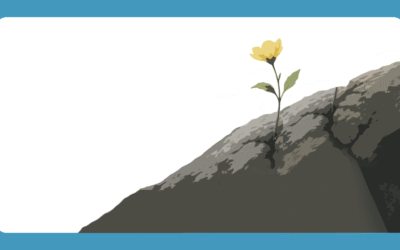
And a final word to the young women who may read this. You do not need to have everything worked out. You do not need to fit a mould. Don’t wait for perfect confidence – it may never arrive. Use the voice you have now. Support one another. And when the path seems steep or uncertain, remember the lesson I learned on the Mont Blanc trail and carried with me throughout my career: take the next step. The rest will reveal itself.
Tech and Diplomacy Recently, I was sitting on a train from Blackheath to London Bridge, gazing at the London skyline. An elderly couple next to me were doing the same, commenting in awed tones on Canary Wharf and the city beyond. “I can’t believe all this change has happened in our lifetime,” the woman said. To have worked internationally over four decades is to have witnessed an extraordinary transformation. The impact may be less visually dramatic than London’s skyscrapers, but it has been more profound in how it has reshaped our world. Keeping up has sometimes felt like running for a bus that has just pulled away. “What’s a fax?” I remember asking my dad in the mid‑1980s, mystified as we drove past a garage advertising ‘Send your fax here!’ “What’s an app?” I asked my husband in 2008, reading about how they would transform our phones and our lives. “What’s Twitter?” I asked a Foreign Office colleague around the same time, as diplomats began to explore social media. For diplomacy, technology has been genuinely transformative. Embassies and ambassadors have been brought out of the shadows, able to communicate directly with people rather than solely with governments. Few have embraced this better than Hiroshi Suzuki, Japan’s Ambassador to the UK, described by The Telegraph as an “adopted national treasure.” Technology has also flattened hierarchies. In Australia and France, I built relationships with senior politicians and business leaders through social media — including the DM function — far quicker than navigating official channels. WhatsApp exchanges between world leaders are now routine, if not always secure. Some argue this diminishes the role of ambassadors. I see it differently. Our purpose is to enable relationships, not to stand between them. The implications stretch far beyond new tools. We are more connected than ever and information travels instantly, shrinking geographical distance. Even in Australia, major consular cases sometimes reached the UK media before I heard about them. In the cacophony, long and detailed political or economic analyses carry less weight than when I joined the Service. Rather, modern diplomacy puts the emphasis on being outward‑facing, visible and focused on outcomes. Public diplomacy has been transformed by digital campaigns — on media freedom, preventing sexual violence in conflict and preparing UK citizens in Europe for Brexit, to name just a few. Diplomatic skills have evolved too. Speed, creativity, agility and an entrepreneurial mentality sit alongside — and sometimes ahead of — discretion and caution. There is still a place for deep knowledge and expertise, but artificial intelligence is rapidly challenging even that. Co-pilot helped me to edit this article, a tool I would not have considered a year or two ago. If diplomacy is to remain relevant, it must anchor itself firmly in human space. That is why I dislike the tendency to steer customers overseas towards voicemail and call centres, rather than allowing direct access to a human being. The real risk is not that technology moves too fast for diplomacy, but that diplomacy moves too slowly for the world it serves. In an increasingly digital age, diplomats must be visible, empathetic and accountable. That is the human craft at the heart of our profession — and without it, we risk making ourselves obsolete.
|
Dame Menna Rawlings is the President of Queens’ College, Cambridge, and former British Ambassador to France.